
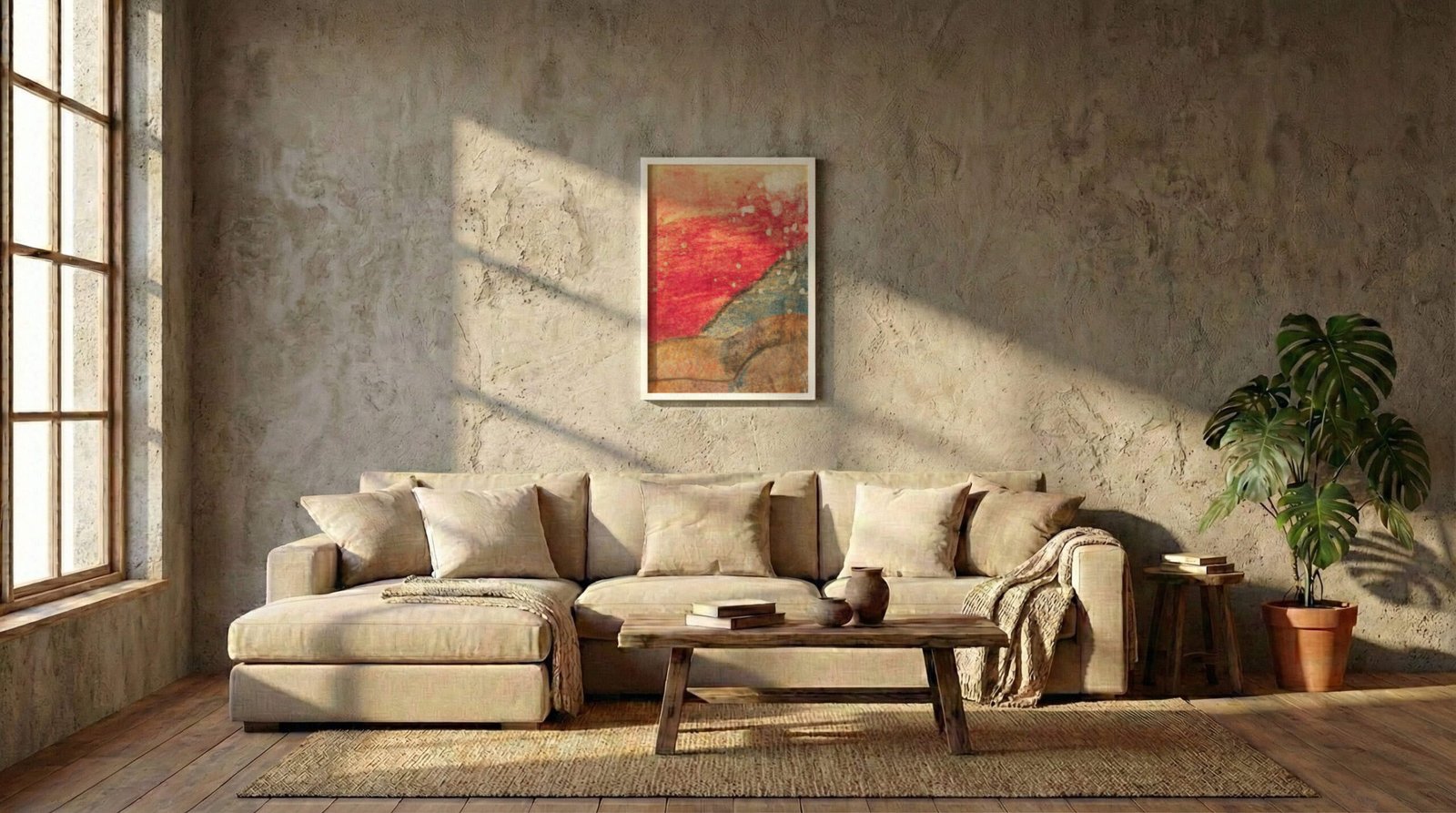
Your living room walls are waiting to tell a story. But with endless art options available online, how do you choose pieces that truly transform your space without overwhelming your budget or your décor?
Whether you’re a first-time art buyer or looking to refresh your home, this guide will walk you through everything you need to know about selecting wall art that reflects your personality, complements your interior, and creates a space you’ll love coming home to.
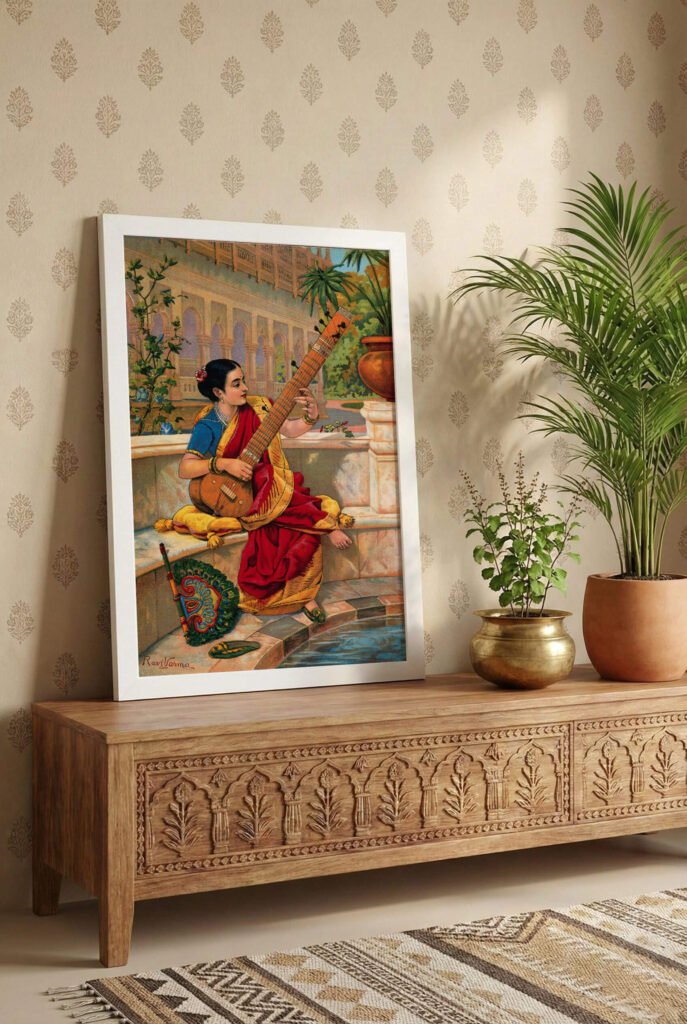
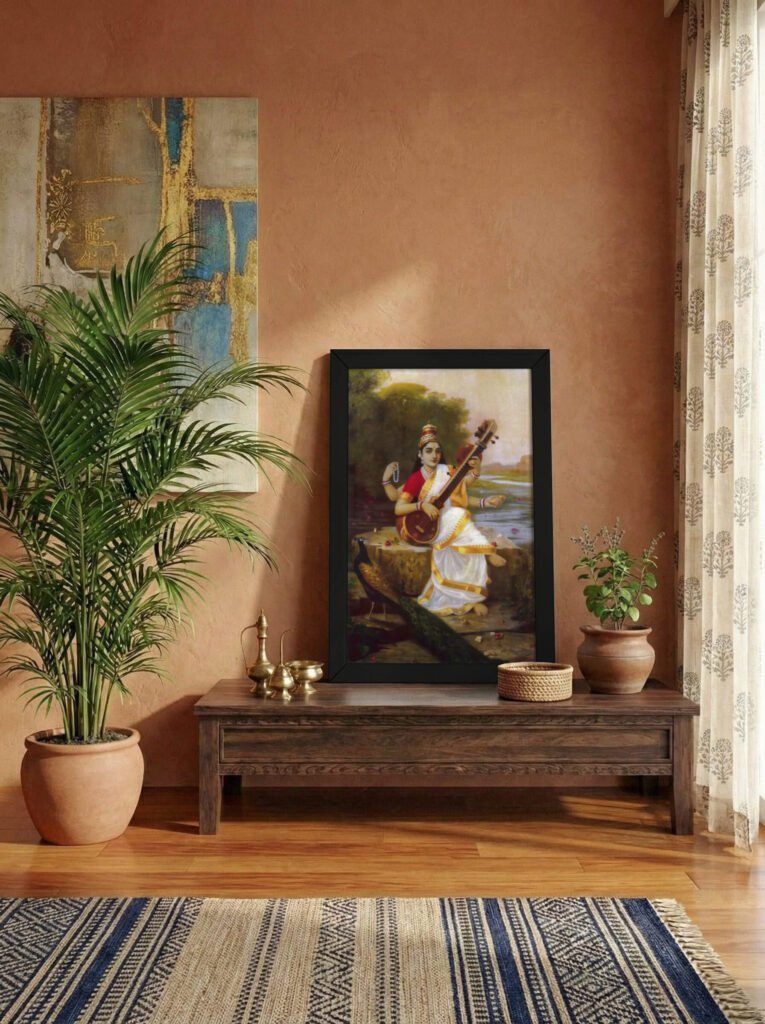
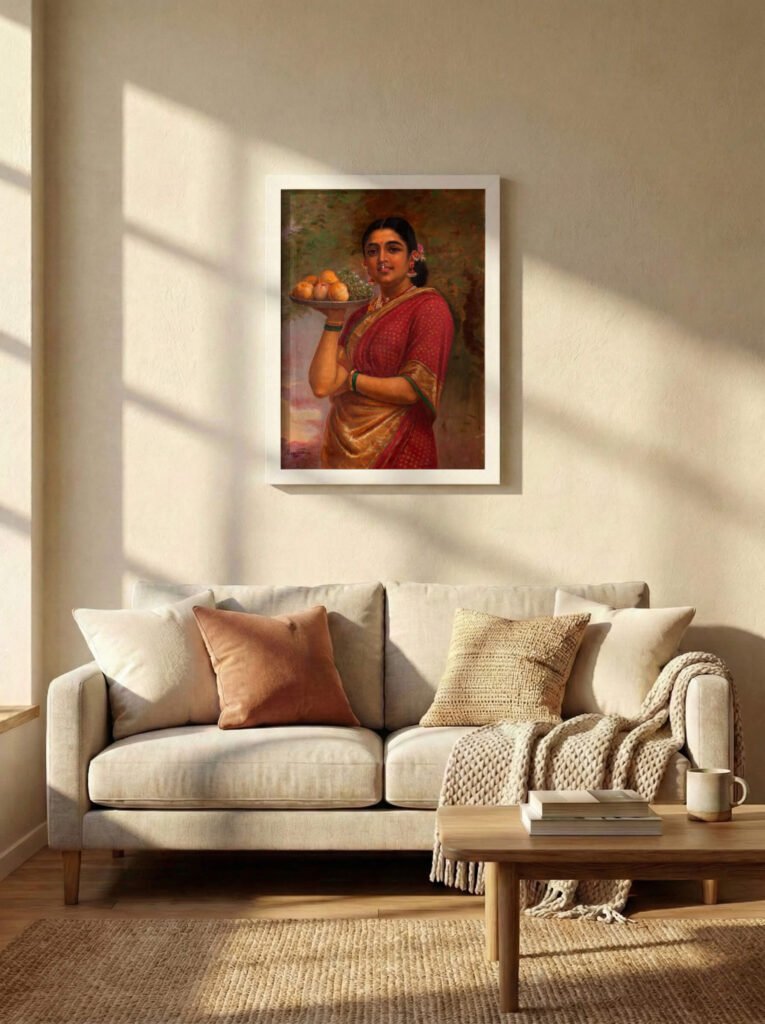
See how heritage art transforms modern Indian living rooms
Understanding Your Interior Style First
Before you fall in love with a painting, take a moment to assess your living room’s existing aesthetic. This single step will save you from expensive mistakes and ensure your art investment pays off.
For Modern & Contemporary Homes: If your space features clean lines, neutral furniture, and minimalist décor, abstract art and geometric pieces work beautifully. Japanese-inspired minimalist prints with negative space create visual breathing room and add sophistication without clutter.
For Traditional Indian Interiors: Homes with wooden furniture, ethnic textiles, or vintage elements pair wonderfully with heritage art. Ravi Varma prints, Madhubani art, or classical compositions bring cultural richness while maintaining authenticity.
For Eclectic & Bohemian Spaces: Mixed furniture styles and vibrant textiles call for bold abstract pieces or nature-inspired Japanese art that ties the room together through color and emotion.
The Three Golden Rules of Art Selection
Rule 1: Size Matters More Than You Think
The most common mistake Indian homeowners make? Choosing art that’s too small for their wall space.
Practical sizing guidelines for your space:
Small Prints (8×10″, 8×12″, 11×14″)
- Perfect for: Gallery walls, shelf styling, accent spots, entryways
- Best placement: Grouped in sets of 3-5, bedside tables, console tables
- Avoid: Hanging alone above large sofas — they’ll look lost
Medium Prints (12×16″, 12×18″, 16×20″)
- Perfect for: Small to medium living rooms, apartment walls, creating focal points
- Best placement: Above loveseats, accent chairs, or side buffets
- Room recommendation: Rooms 10×12 feet or smaller
Large Prints (16×24″, 18×24″, 20×30″)
- Perfect for: Statement walls, above standard sofas (6-7 feet wide)
- Best placement: Main living room wall, above dining credenzas
- The golden rule: Your artwork should be 60-75% the width of the furniture beneath it
Pro tip: For a 6-foot sofa, choose a 16×24″ or 20×30″ print for proper visual balance. For larger 8-foot sectionals, consider creating a gallery wall with multiple medium pieces (3 pieces at 12×16″ or 16×20″).
Rule 2: Let Color Enhance, Not Dictate
Heritage and classical art—think Ravi Varma, Van Gogh, and timeless masterpieces—have a secret advantage: they were created to stand alone and command attention.
How to make classical art work in any room:
Look for tonal harmony: Choose pieces where the dominant tones (warm vs. cool) complement your room’s overall temperature. Rich jewel tones and earthy hues are trending in 2026 and work beautifully in Indian homes.
Don’t overthink exact color matches: Classical art brings its own palette and creates visual interest through contrast. As designers note, “It’s about balance, not matching”.
Focus on emotion over coordination: A Ravi Varma portrait or Van Gogh landscape should evoke feeling and tell a story. That’s what transforms a room from decorated to deeply personal.
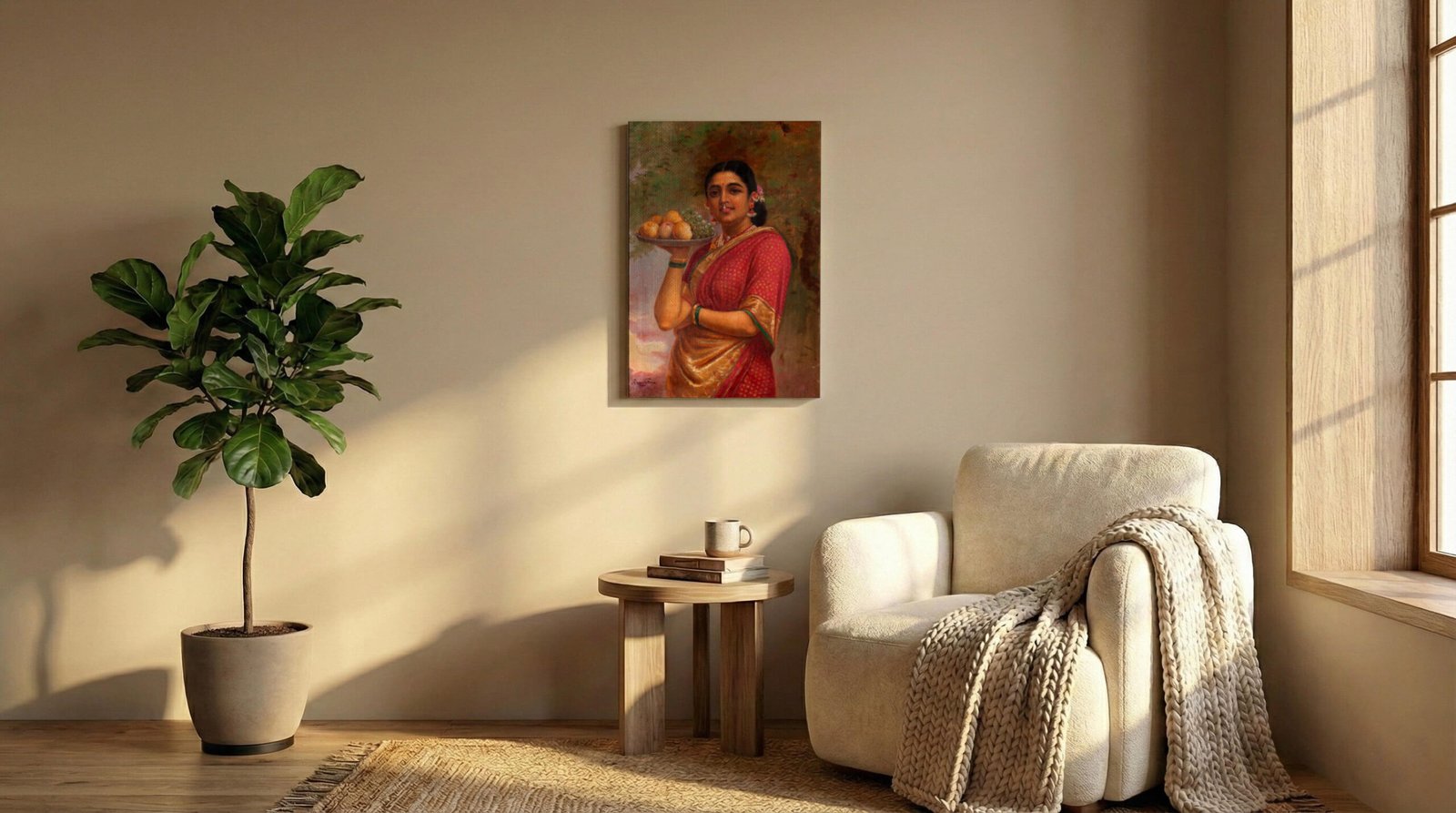
Real example: A homeowner in Delhi placed a rich, warm-toned Ravi Varma print in her neutral beige living room. Rather than clashing, the artwork became the room’s focal point and inspired her to add burnt orange cushions and brass accents—transforming a bland space into a curated sanctuary.
Rule 3: Let Your Walls Breathe
In Indian homes, we often love filling every inch of wall space. But the best art needs negative space to shine.
Leave at least 6-8 inches of blank wall around your primary artwork. This “visual padding” helps your eye focus on the art itself and prevents your room from feeling cluttered.
As designers embracing the modern heritage trend emphasize: “Layer thoughtfully. It’s about creating spaces that feel lived-in, not just decorated”.
Why Heritage Art is Having a Moment in 2026
If you’ve been drawn to classical paintings lately, you’re not alone. Heritage art is experiencing a major renaissance in 2026.
Composition in Red & Blue
 From ₹1,199
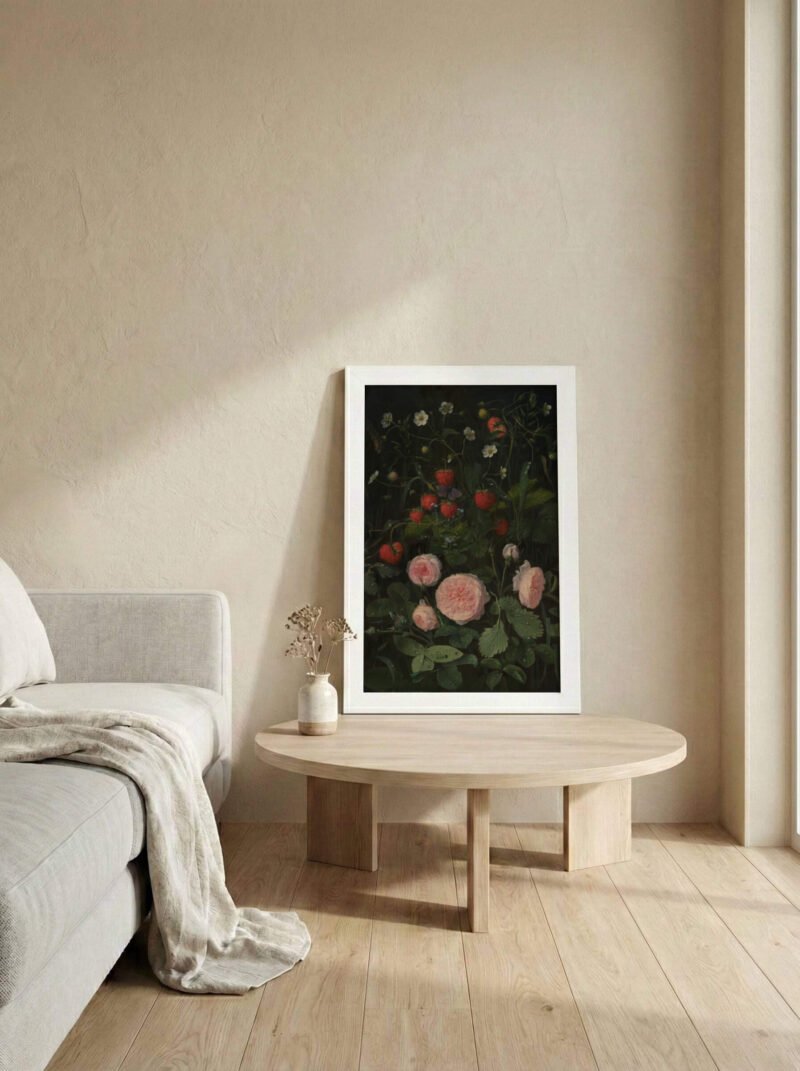
Ethereal Roses
 From ₹1,199
Flora Maxima
From ₹1,199Floral Abundance Botanical
 From ₹1,199
Garden Treasures
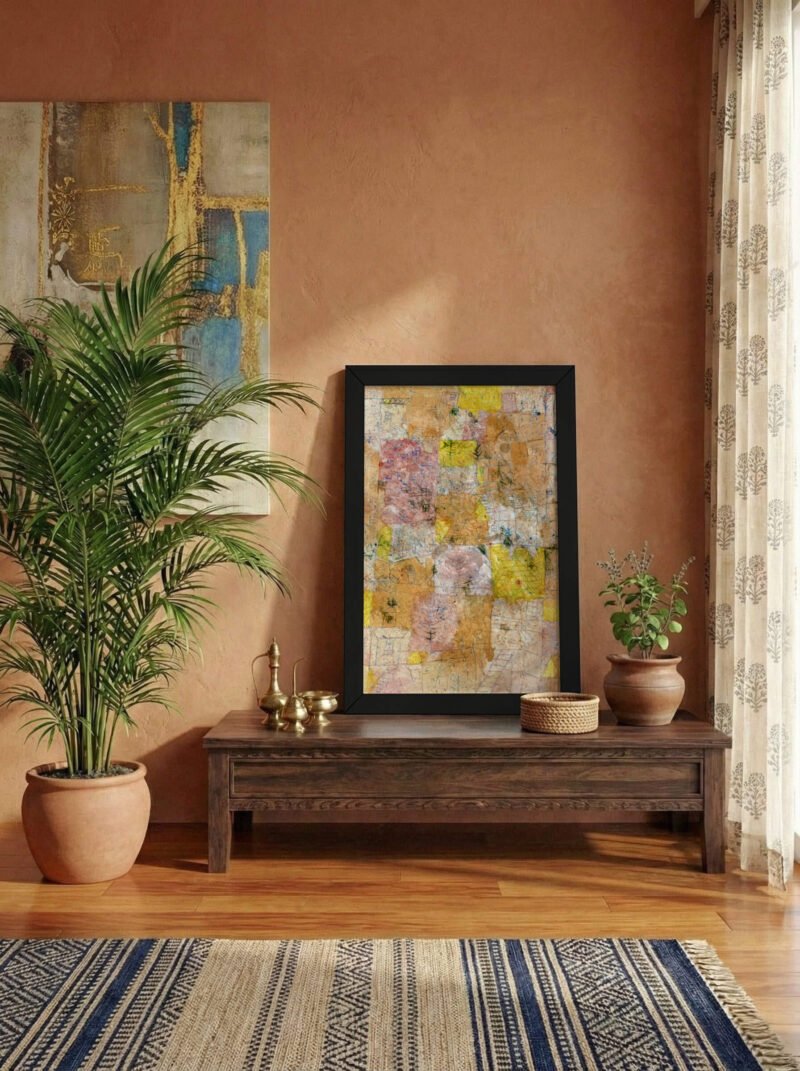
From ₹1,199Geometric Village
From ₹1,199
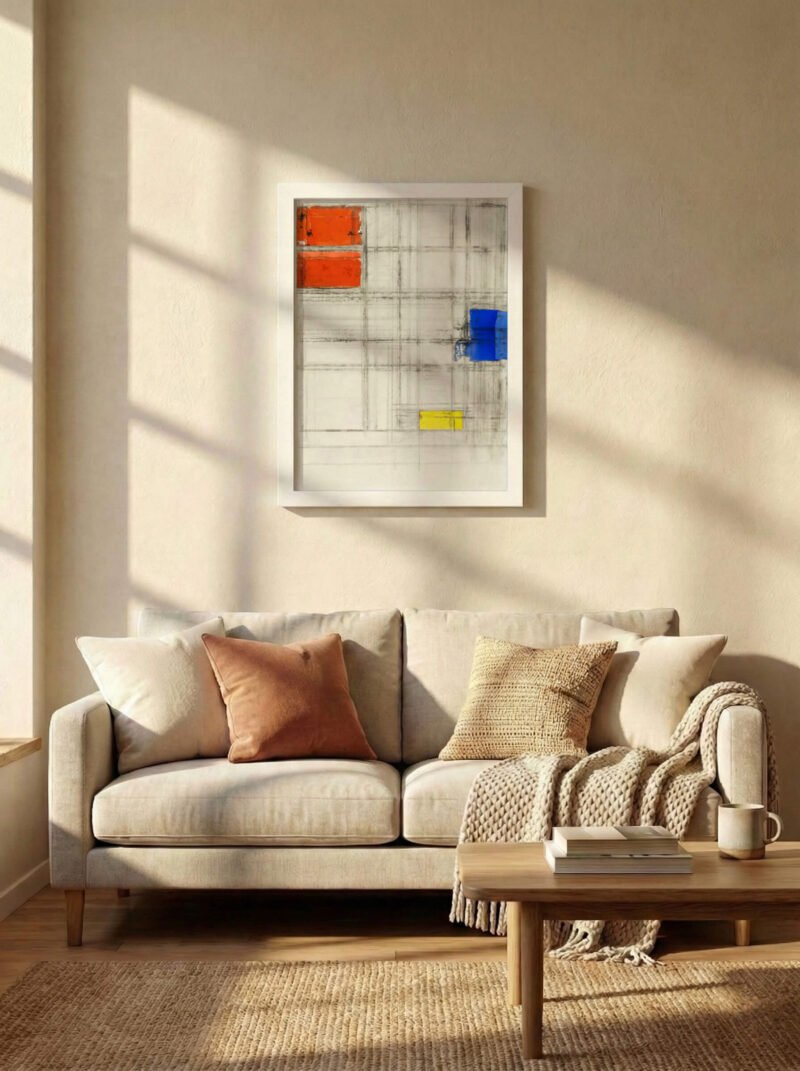
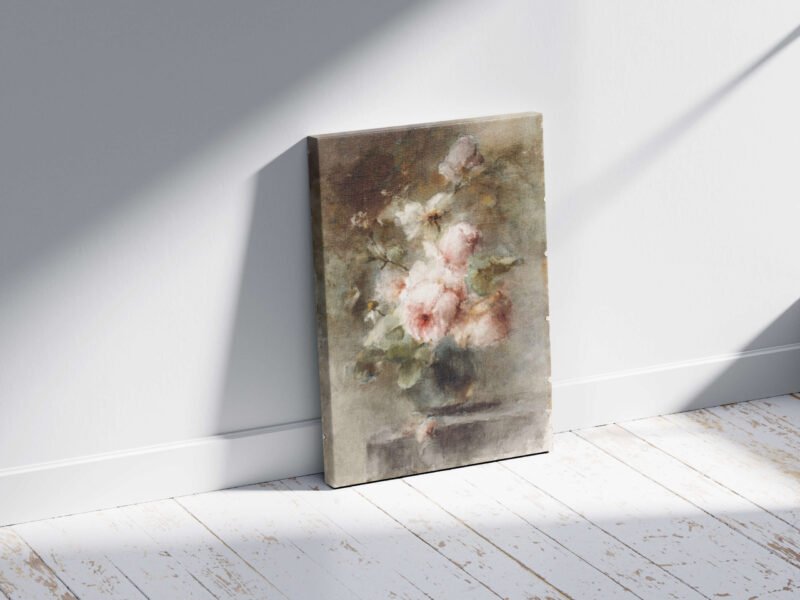
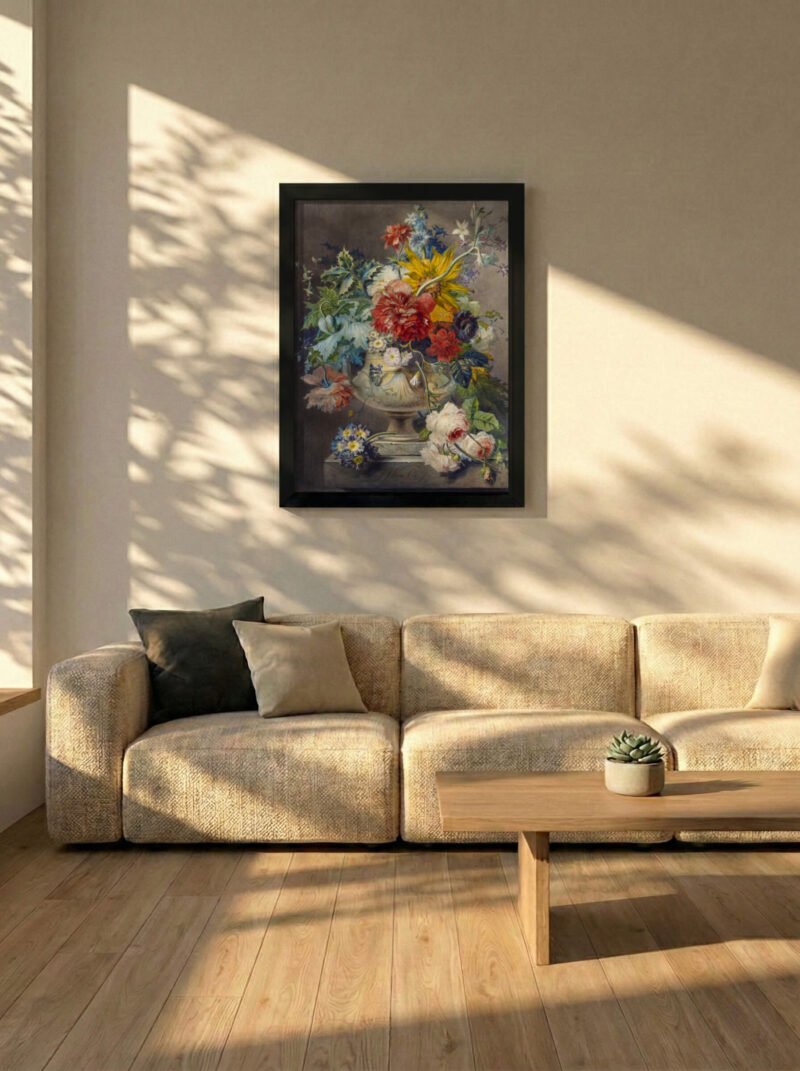
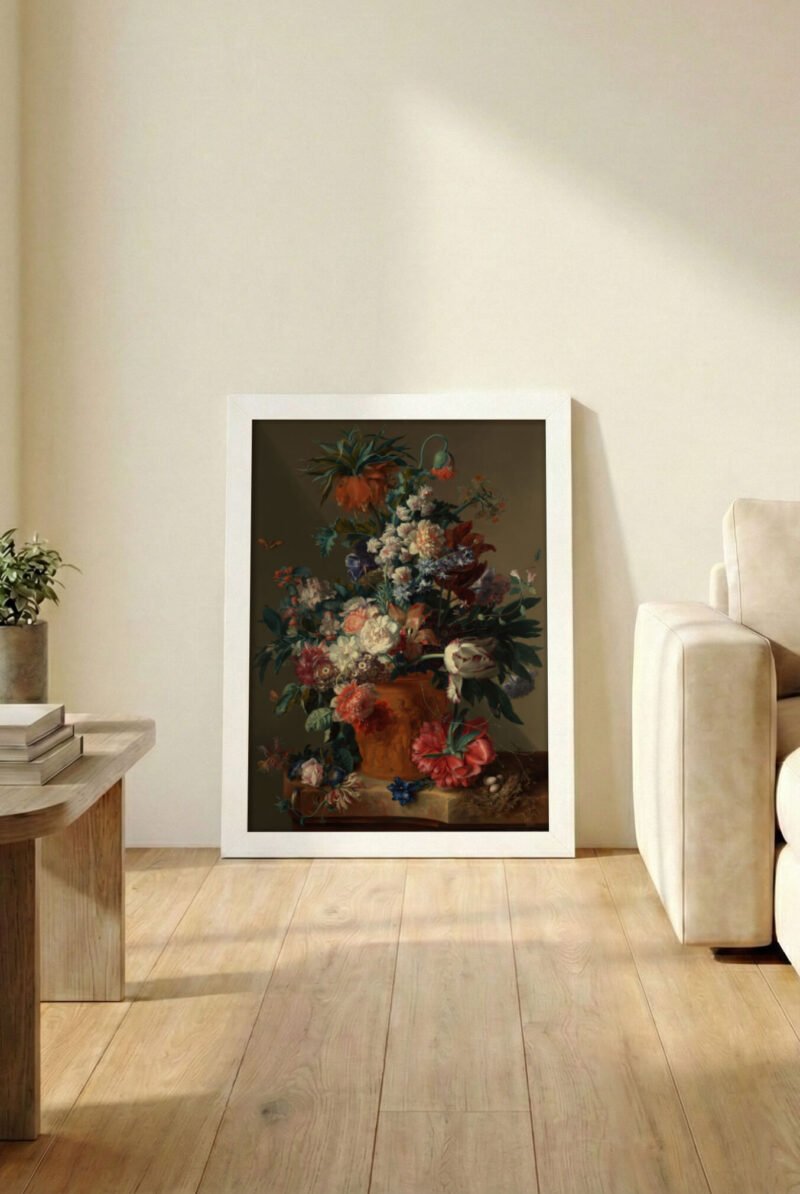
The “Modern Heritage” Movement
Designers are calling it “modern heritage”—a blend of vintage elements with contemporary sensibilities. This trend celebrates:
- Timeless sophistication: Oil paintings, intricate compositions, and classical subjects that feel storied and connected to history
- Heritage maximalism: Layering pattern, color, and nostalgia with a refined, curated twist
- Emotional depth: Pieces that evoke warmth and depth, making spaces feel truly lived-in
Indian Masters Meet European Icons
Ravi Varma & Classical Indian Art
India’s artistic heritage shines through works by masters like Raja Ravi Varma, whose mythological scenes and portraits revolutionized Indian painting. These pieces:
- Connect your home to India’s rich cultural legacy
- Tell stories from epics, mythology, and everyday life
- Bring warmth, narrative, and sophistication to any space
- Work beautifully in traditional, fusion, and even modern interiors
European Masters Like Van Gogh
Universally loved works transcend trends and geography:
- Landscapes, still lifes, and portraits with timeless emotional resonance
- Museum-quality beauty that looked stunning in 1890 and still captivates today
- Perfect for modern apartments, minimalist spaces, and art enthusiasts
Why classical art works everywhere: Unlike trendy pieces that date quickly, heritage art has proven staying power. These are investments in beauty that grow more meaningful over time.
Practical Tips for First-Time Art Buyers
Start with one statement piece: Don’t try to fill every wall at once. Choose one focal wall and one powerful artwork in a medium or large size (16×20″ or larger).
Consider your furniture width: Measure your sofa or console table, then choose art that’s 60-75% that width. For a 72-inch sofa, a 20×30″ print works beautifully.
Think about viewing distance: Smaller rooms need smaller to medium prints (12×16″ to 16×24″). Larger rooms with more viewing distance can handle bigger statements (18×24″ to 20×30″).
Test with paper: Before buying, cut paper to your desired print size and tape it to the wall. Live with it for 2-3 days to ensure the scale feels right.
Embrace the trend: “Preserve original features and let them become the foundation for your design,” say leading designers. Classical art becomes that foundational piece that anchors your entire room.
Trust your instinct: If a Ravi Varma portrait or Van Gogh landscape makes you pause and feel something—that’s your answer. Art should evoke emotion, not just fill space.
Common Mistakes to Avoid
❌ Choosing prints that are too small: An 8×10″ above your sofa will disappear—save small sizes for gallery walls or shelf styling
❌ Hanging art too high: The center of your artwork should be at eye level (57-60 inches from the floor)
❌ Overthinking color coordination: Heritage art brings its own palette—let it set the tone rather than forcing it to match
❌ Buying multiple small pieces when you need one large one: Three 8×10″ prints spread across an 8-foot wall looks sparse; one 20×30″ print makes a statement
❌ Following trends blindly: “It’s about what makes your home feel personal and timeless,” note interior experts. Choose pieces that speak to you, not just Instagram.
Sizing Guide: Quick Reference
Creating Your Perfect Living Room
Ready to transform your living room?
Explore curated collections of heritage Indian masterpieces and classical European works—each piece handpicked for modern Indian homes and priced to make museum-quality art accessible to everyone.
Discover art that tells your story.
With warmth,
The Kala Aura Team